An ezine is a magazine published electronically instead of on paper. The word is short for "electronic magazine" or, if you go back far enough, "electronic fanzine." It covers anything that comes out in issues and arrives on a screen: a PDF someone emails you, a download link, a flipbook you page through in a browser.
The definition sounds tidy and the reality isn't, because "ezine" has meant different things to different people since the 1980s. A hacker in 1986 and a life coach in 2004 would both have told you they published one. So would a teenager making a poetry ezine in Canva this week. Search the word and all three crowds land on the same results page, which is why so many explanations of it contradict each other.
What an ezine looks like today
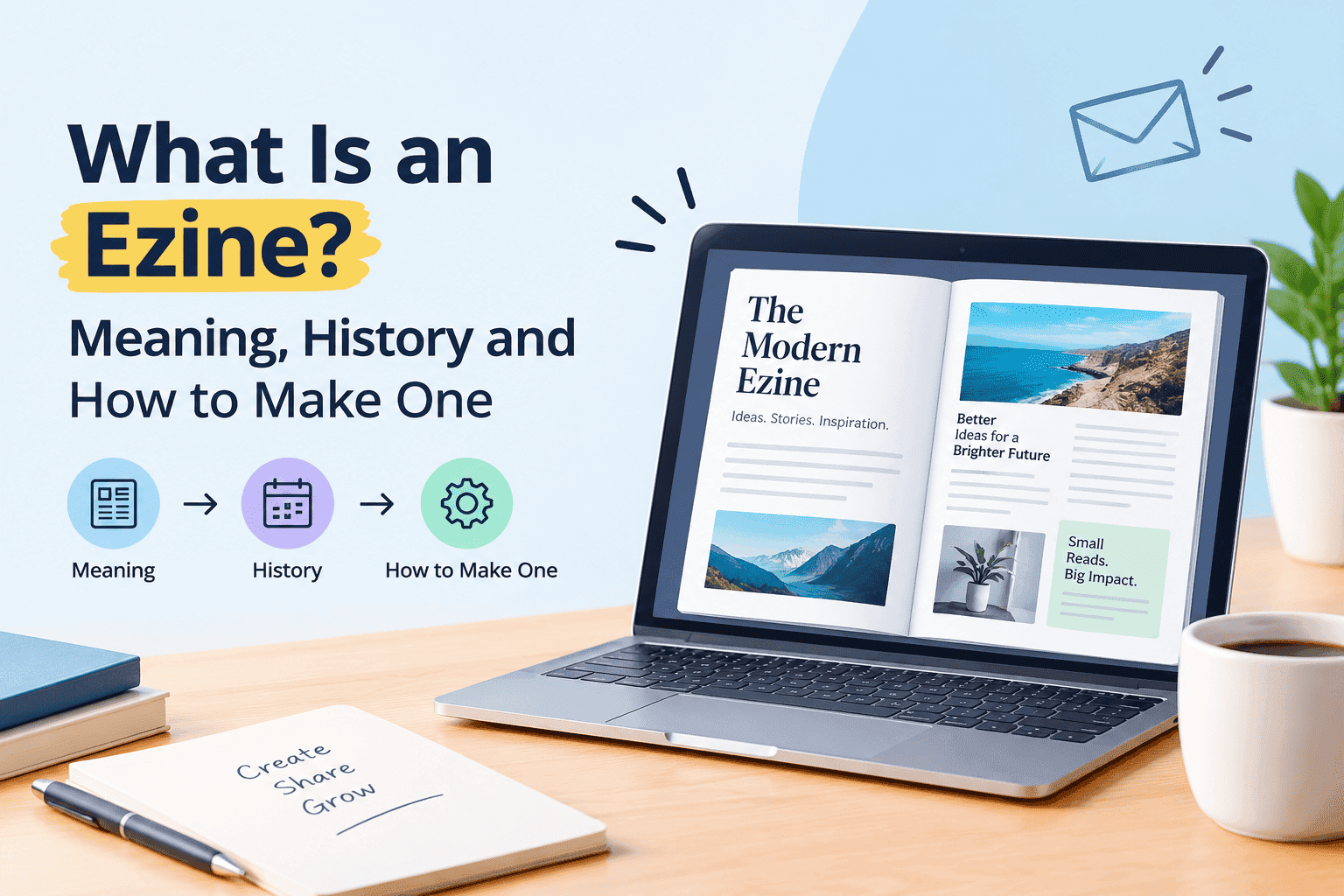
Most modern ezines run somewhere between 8 and 40 pages. There's a cover with an issue number or a date, usually a contents page, a handful of features, some pictures, and a back page that says where to find the next one. Delivery varies: a PDF attached to an email, a link to a hosted flipbook, a file sitting on a website, sometimes all three for the same issue.
The subjects follow no pattern. Fan communities make them. So do poets, hobby clubs, school societies and neighbourhood associations, plus the odd florist who puts a few essays into a seasonal catalogue. Freelancers send out a quarterly one as a portfolio that lands in somebody's inbox instead of sitting on a website nobody visits.
What separates an ezine from a blog is the issue. It has a start and an end, somebody decided what goes in and what stays out, and a reader can finish it. A feed never lets anyone finish, and plenty of publishers pick the ezine format for that reason alone.
Where the word "ezine" came from
Ezines are older than the web. In the mid-1980s people ran bulletin board systems, which meant a computer in a spare room with a phone line you dialled into, and most of the files passed around on them were plain text. Cult of the Dead Cow started in Lubbock, Texas in 1984 and distributed its writing that way. Phrack, a hacking magazine, put out its first issue in November 1985 and has resurfaced on and off ever since. Nobody charged for any of it. Somebody wanted to write about phone systems or punk bands or a TV show, and a modem cost less than a photocopier.
Print zines were running in parallel. Mike Gunderloy started Factsheet Five in 1982 to review the photocopied zines that otherwise nobody could find, and a lot of that scene moved online once the web opened up. Boing Boing began as a printed zine in 1988 and had a website by 1995. Today it's a blog with a staff, which tells you how far an ezine can wander from where it started.
In the late 1990s the marketers took the word. Email was cheap and mailing lists were new, so "ezine" turned into shorthand for a recurring email to subscribers: two articles and a pitch. Consultants told each other to start one. Article directories like EzineArticles appeared so that ezine editors had free content to fill their issues. If you see a page that tells you to "grow your ezine list," it was probably written in that era or by someone who learned from it.
Then social media made email newsletters look dated, Substack made them look fresh again, and "newsletter" became the word for anything that arrives in an inbox. That left "ezine" with the leftovers: the designed, page-based, magazine-shaped publication. The word has drifted back toward its fanzine roots, which is why current searches for "ezine creator" and "ezine software" are mostly people who want to lay out pages, not manage a mailing list.
Spelling is a mess as well. Ezine, e-zine and eZine all mean the same thing. Google treats them alike, style guides don't, and you can pick whichever you like as long as you stick to it.
Turn Your PDFs into Lead Generation Machines
Start getting highly-qualified leads from your PDFs and landing pages today. It takes exactly 2 minutes to set up.
No credit card required • Sign up in 10 seconds
Ezine vs newsletter vs zine vs digital magazine
These five get confused constantly, mostly because the edges are soft. By length, an ezine usually runs 8 to 40 pages, a newsletter 300 to 1,500 words, a print zine 8 to 32 pages, a digital magazine 30 to 100 or more, and an ebook anywhere from 20 to 300. The first four come out in issues, an ebook doesn't, and the overlap between them is where the confusion starts.
A newsletter is text first and lives inside the email. If you can read it in an inbox in four minutes and never click away, it's a newsletter. An ezine is the thing you open as its own object, with a cover and page turns. Plenty of people use the two words interchangeably and nobody will stop them.
A zine is the print version: a sheet of paper folded into a little booklet, photocopied, stapled, handed over at a gig or posted to a stranger. An ezine is the digital relative, and a scanned zine counts as one. A digital zine can still feel like a zine instead of a scanned photocopy if you keep the odd page sizes and the rough edges, and this walkthrough on making a digital zine that actually feels like a real zine goes through how.
A digital magazine is the same object with a bigger operation behind it: a staff, ads, subscriptions, a newsstand listing. The line is fuzzy, but ezine usually means one person or a few friends, and digital magazine means somebody gets paid. Both raise the same question about whether to send a bare PDF or a page-turning version, which is laid out in digital magazine vs PDF.
An ebook is a single finished work with chapters. It doesn't come out again next month. If you're publishing once, it's an ebook. If you're planning issue two, you're making an ezine.
Why people still publish an ezine
The audience belongs to you. A post on a social platform is shown or hidden by a system you don't control, and the follower count you spent three years building can turn into a rounding error after one algorithm change. A list of email addresses and a link to your latest issue don't depend on anyone's mood.
The tone is looser. Feeds reward the short and the loud. An ezine lets you run a 2,000-word piece on a niche obsession, a photo essay, a half-finished poem and a letter from the editor on the same spread, and readers who sign up for that sort of thing tend to read all of it.
The cost is close to nothing. A print run of 500 glossy copies is a real bill before you've sold anything. An ezine costs an evening in a layout tool, and the second issue costs less than the first because the template already exists. That's why hobbyists, students and micro-publishers dominate the format.
Businesses use them too, usually as a customer magazine. A garden centre sends a spring issue with planting guides and a few product pages. An estate agent puts out a quarterly with local market notes and new listings. A consultant bundles case studies into something people forward to colleagues, which a loose pile of blog posts rarely gets. Put a short sign-up form in front of the issue and the ezine starts collecting email addresses while it's being read.
The limits are mostly about stamina. Most ezines die around issue three, when the editor runs out of material or free evenings. A monthly schedule you abandon in March does less for you than a quarterly one you keep for five years, so choose the slower cadence on purpose. The other limit is technical: a big PDF attached to an email can bounce or get ignored.
How to make an ezine
Start with a subject narrow enough that you can name the reader. "Photography" is too wide. "Film photographers in Manchester who develop at home" gives you something to write about for years. Then fix a length and a schedule before you write a word. For a first issue, 12 pages is plenty, and quarterly is a kind default if you're on your own.
Plan the contents like a short magazine: a cover, a contents page, three or four features, a few short items, one regular column you can repeat every issue, and a back page saying when the next one lands. The recurring column does more for retention than any design flourish, because readers come back for it. Put the issue number and date on the cover from day one, even if issue one has an audience of eleven.
For layout, use whatever you already know. Canva, Google Docs, Word and InDesign all export PDFs, and a portrait page in A4 or US Letter reads fine on a phone and prints without drama. Pick two fonts, keep your margins wide, and use the same grid for every page. Export at 150 dpi unless you plan to print, in which case 300.
The file size is where first issues go wrong. A 24-page ezine with full-bleed photos can easily come out at 40 to 80 MB, and Gmail stops accepting attachments at 25 MB, so half your list may never get the thing. Compress the images before export, or skip the attachment and send a link. Hosting the issue as a page-turning flipbook solves it in one step: readers open it in a browser, nothing downloads, and you can see how many people opened it. ZipFlipbook converts a PDF into one for free, and the same link works in an email, on a website or in a social bio.
If you're sending by email, put the cover image in the body and link it to the flipbook, with a one-line teaser underneath. If you'd rather embed than link, there are steps for putting a flipbook in an email campaign. Reply-to should be a real address you read, because the first few replies are how you find out what to put in issue two.
After publishing, write down what took the longest. It's usually gathering contributions or fixing photo sizes, and the answer tells you what to set up before the next issue.
Turn Your PDFs into Lead Generation Machines
Start getting highly-qualified leads from your PDFs and landing pages today. It takes exactly 2 minutes to set up.
No credit card required • Sign up in 10 seconds
Ezine FAQ
What does ezine stand for?
Electronic magazine, or electronic fanzine in the older sense. You'll also see it written e-zine or eZine.
Is an ezine the same as a newsletter?
No. A newsletter lives in the body of an email and takes a few minutes to read. An ezine is a separate multi-page publication with a cover, though plenty of people use both words for the same thing.
What is the difference between a zine and an ezine?
A zine is on paper: folded, copied and stapled. An ezine is digital. A scanned zine is an ezine.
Are ezines still used?
Yes, by fan communities, poets, small businesses and anyone who wants to publish in issues without paying for printing. The word is rarer than "digital magazine" or "digital zine," but the format hasn't gone anywhere.
How do I make an ezine for free?
Lay it out in Canva or Google Docs, export a PDF, and turn the PDF into a flipbook with a free converter like ZipFlipbook. Share the link instead of attaching the file.
How long should an ezine be?
Twelve pages is a good first issue. Go longer once you've shipped three and know what readers open.
How often should I publish one?
Quarterly if you work alone, monthly if you have contributors. Skipping an issue costs you more readers than a slow schedule does.
Making your first issue
Write the title and a six-item contents list today. Set a deadline two weeks out, tell one person about it, and make the cover last, because it's easy to lose a weekend to a cover for an issue that has no pages yet. When the PDF is done, check its size before you send it to anyone.