A joiner I know spent a weekend turning his price list into a flipbook. It looked lovely. Then he tried to find out whether anyone had opened it, and the answer was hidden behind a plan upgrade. He'd built a shop window with no way to see who was walking past.
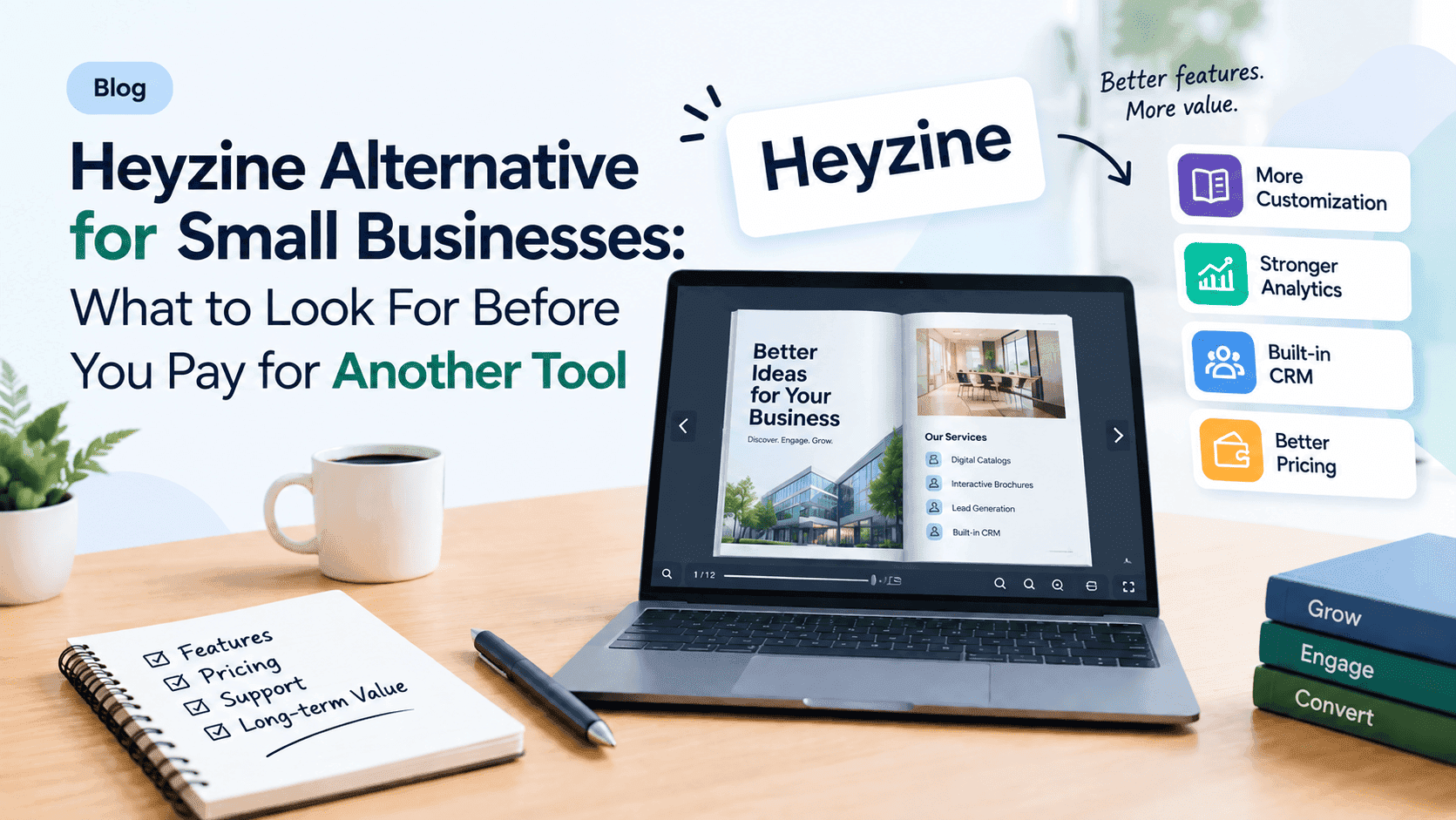
That's the small-business version of the Heyzine question. Heyzine isn't bad. It's cheap, it's been around a while, and it converts a PDF into a page-turning flipbook without much fuss. If all you need is a PDF that flips, it'll do the job. Most people switch because they need the flipbook to sell, not just flip. That's where the pricing starts to matter.
What Heyzine does well
Heyzine's free plan gives you a handful of flipbooks with unlimited pages, and it doesn't plaster ads across your content. By their own FAQ they don't put a watermark over the pages either, though they do show their logo in the corner of the viewer until you pay to swap in your own. Paid plans start low compared with most of the flipbook market.
For a school newsletter or a one-off menu, that's fine. Nobody needs a sales funnel for a bake sale.
Turn Your PDFs into Lead Generation Machines
Start getting highly-qualified leads from your PDFs and landing pages today. It takes exactly 2 minutes to set up.
No credit card required • Sign up in 10 seconds
Where it gets expensive
Small businesses rarely publish a flipbook for fun. It's a brochure, a price list, a lookbook, a catalogue, a quote pack. Each of those exists to make someone pick up the phone or hand over an email address.
Reader stats, lead forms and Google Analytics sit in Heyzine's higher tiers, not the entry one. So you can pay for the cheapest paid plan, lose the branding, and still have a flipbook that tells you nothing about who read it. To get the part that helps you sell, you step up a level. Then a custom domain sits above that again.
That's normal tiered pricing, but if you're a plumber, florist, or two-person agency, check what you're actually buying before you pay. A flipbook you can't measure is a fancier PDF, and a PDF attachment is exactly what most of us are trying to get away from. I wrote about why in how to improve cold email conversion rates, and the short version is that people don't open attachments from strangers, so a link to a flipbook simply gets opened more often.
What I'd check before switching
Check what's actually free. Free plans are marketing. Find out whether the flipbooks you make on it look presentable to a customer, and whether there's a cap that kicks in the week you finally get busy.
Can you capture leads without upgrading? For most small businesses, this is the one that matters. If your brochure is doing its job, someone should be able to read the first few pages, decide they're interested, and leave their email to keep going. I go through how to do that without scaring people off in the soft gating method. Gate the whole thing too early and people bounce. Gate it never and you've learned nothing.
Can you see what happens after you send it? Page views are the minimum. What you want is time spent reading and the page where people give up. That page is usually the one you should rewrite.
Does it work on a phone? Most of your customers will open your link on one, probably while standing in a queue. A flipbook that needs pinching and zooming to read is a bad flipbook, however pretty it is on your laptop.
Can you put it where your customers already are? That means a shareable link, an embed on your own site, and a link that behaves in an email or a WhatsApp message.
Where ZipFlipbook fits
I built ZipFlipbook because I got tired of paying for things I could see were basic. It's free, it runs in the browser, and you can upload a PDF from the homepage without opening an account. Lead capture and analytics aren't a paid extra you discover later. Embedded media is supported, and every flipbook gets a link you can share or drop straight into a website.
The process is short. Upload the PDF, it builds the flipbook, send the link. I've got the step-by-step for turning any PDF into a digital brochure in under 60 seconds if you want it. If you already have a PDF brochure sitting in a folder, you can be done before your tea goes cold.
It's not for everyone. If you need a custom domain with a digital bookshelf and twenty user seats, you're shopping for a different kind of tool and one of the bigger platforms will suit you better. But for a tradesperson, a small shop, a consultant, or an agency sending proposals, the things above are most of what you'll ever use.
Turn Your PDFs into Lead Generation Machines
Start getting highly-qualified leads from your PDFs and landing pages today. It takes exactly 2 minutes to set up.
No credit card required • Sign up in 10 seconds
So which one?
If the flipbook is just a nice extra, Heyzine's free plan is fine.
If it's meant to bring in enquiries, choose based on what you get to see afterwards. The features you'll wish you had a month in are lead capture and reading data, so make sure they're included at the price you're paying now and not the price you'd pay after an upgrade. Digital brochures also get treated differently than plain PDFs, and why digital brochures are replacing plain PDFs shows how big that difference is.
My joiner friend, by the way, rebuilt his price list in a tool that showed him who was reading. It turned out nearly everyone dropped off on page four, where the terms lived. He moved them to the back. Enquiries picked up. He couldn't have known that without reading data. The animation didn't matter.
If you want more leads from what you already publish, start with capturing more leads from your existing content.