Most businesses send a brochure once and then never think about it again. It goes out with a quote, or attached to a "thanks for stopping by" email, and that's the end of its life. Which is weird, because that PDF holds everything a hesitant customer needs to say yes. And you're just... abandoning it.
I've watched this happen at Slingshot with client after client. A tradesperson sends a PDF price list to a customer who "wants to think about it," and that PDF disappears into a downloads folder, never to be opened again. The lead doesn't say no. They just go quiet. And most businesses read that silence as rejection when it's usually just distraction — the customer got busy, forgot, or lost the file. A static PDF gives you no way to know which one it was, and no way to do anything about it either way.
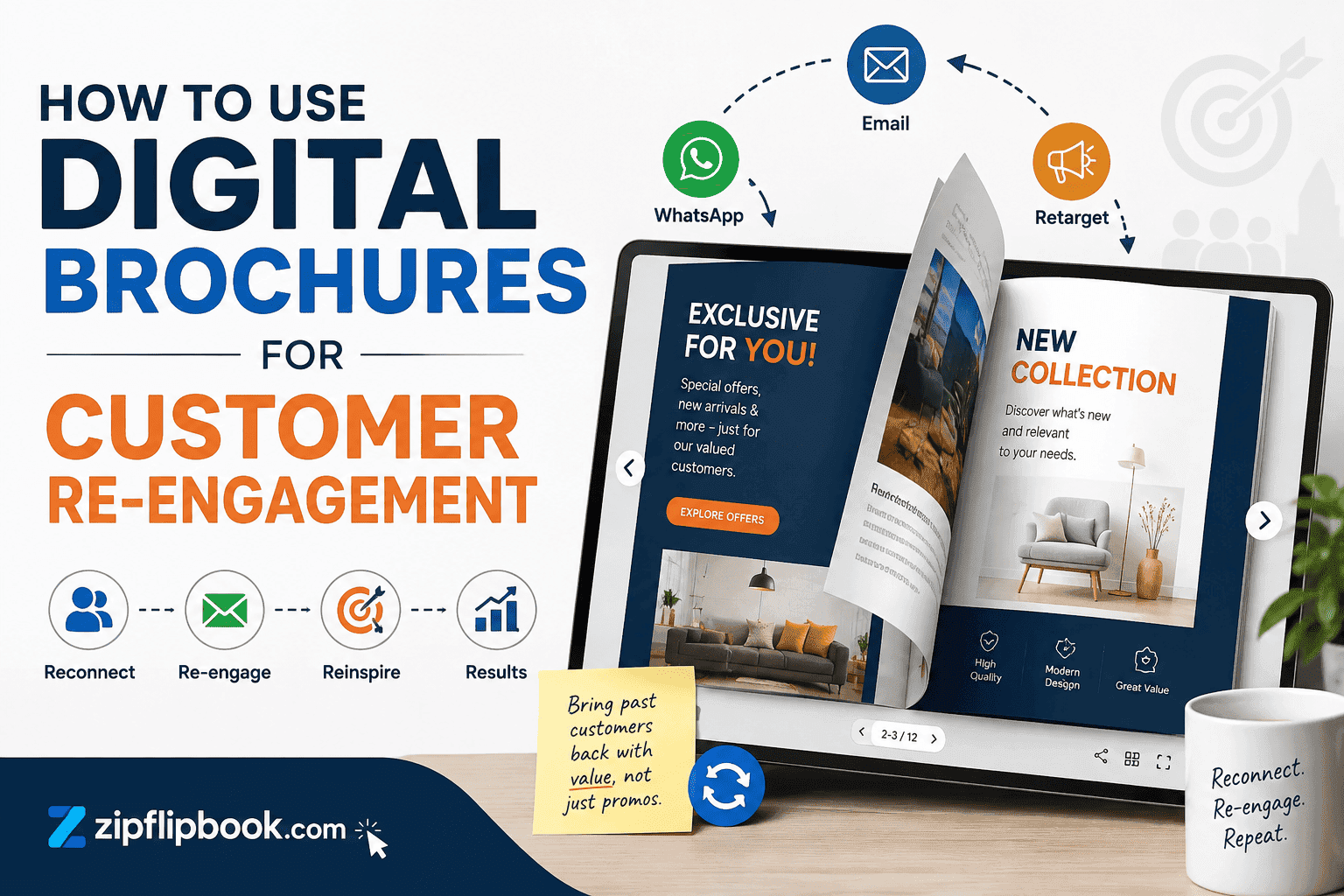
A digital brochure fixes this in one stupidly simple way: it turns your dead PDF into a living thing. You can watch it, chase it, and actually use it to restart a conversation that went cold.
Why static PDFs kill re-engagement before it starts
A PDF you email out is a one-way door. You send it, and from that point on you're guessing. Did they open it? Did they get to the pricing page, or bail after the cover? Did they forward it to someone else who's actually the decision-maker? None of that is visible to you, so your only re-engagement tool becomes a cold "just checking in" email, which everyone — including you — knows is a bit desperate.
The other problem is that a static PDF is frozen the moment you hit send. If your prices change, or you add a new service, or that one photo turns out to look terrible on mobile, every copy already sitting in someone's inbox is now wrong, and there's nothing you can do about it.
What actually changes with an interactive brochure
Turn that same PDF into an interactive flipbook and a few things happen at once. First, you get visibility: page-by-page reading data instead of a black box. I've gone into more depth on setting this up here, but the short version is that you know a lead reread your services page three times but never touched pricing — which tells you exactly what your next email should say.
Second, the brochure stays alive after you've sent it. Because it lives at a link instead of an attachment, you can update the content behind that same URL. The version someone bookmarked in March is still current in August, and if you need to add a seasonal offer or swap out a case study, I've written before about the extra formats worth embedding directly into a brochure, like video — a two-minute walkthrough clip does more to pull someone back in than another paragraph of text ever will.
But here's the sneaky part — and the one nobody actually does. A digital brochure can pull that customer right back into your pipeline on autopilot. Add a lead capture form on a later page — after they've seen enough to be interested but before they've seen everything — and every reopen becomes another chance to collect an email address, a phone number, or a "yes, send me a quote." That's not pushy. You're just giving a curious person a quick, painless way to say "yeah, send me the quote" right when they're most interested.
Where re-engagement actually happens
The brochure itself doesn't do the re-engaging. You do, using what the brochure tells you. Here's what this actually looks like in practice:
The reopen nudge. If your platform shows a lead reopened the brochure after a week of silence, that's your cue to reach out — not with "did you see the brochure" but with something specific to what they actually looked at. "Saw you were checking out the outdoor range again — happy to send over sizing if that'd help." That reads as attentive, not stalkerish, because it's true.
The refreshed send. Rather than writing a brand new follow-up email from scratch, resend the same brochure link with one new addition — a testimonial, an updated price, a limited-time offer. The link doesn't change, so anyone who already had it bookmarked sees the update automatically. If you're doing this through email specifically, embedding the flipbook directly in the campaign rather than linking out tends to get more opens, since there's no extra click required.
The slow drip. Some customers aren't ready to buy on the first look and won't be ready on the third either. That's fine. The goal isn't to convert them immediately — it's to stay one tab open in their browser history so that when they are ready, you're the brochure they go back to instead of a competitor's cold PDF. This is also where building your list around the brochure itself pays off, because a warm lead you can email directly is worth ten you're hoping will remember to come back on their own.
Turn Your PDFs into Lead Generation Machines
Start getting highly-qualified leads from your PDFs and landing pages today. It takes exactly 2 minutes to set up.
No credit card required • Sign up in 10 seconds
A quick example
A client of ours runs a small landscaping outfit and used to send a static seasonal catalog PDF every spring. Open rates were a mystery, follow-ups were guesswork, and by June the catalog was already out of date. We switched them to a flipbook version with a lead form on the last page and video walkthroughs of two flagship projects. Within the first six weeks, a third of their previous-season customers reopened it at least once — and the ones who reopened it twice were the ones who actually rebooked. That second open was the tell. Nobody re-opens a landscaping PDF in June unless they're about to dig up their backyard.
FAQs
Do I need a new brochure to start re-engaging old leads, or can I just convert what I already have? Convert what you have. Most of this works off a PDF you've already made — a price list, a catalog, a proposal. Upload it, turn it into a flipbook, and the tracking and lead capture layer on top without you redesigning anything.
How long should I wait before following up on a reopen? There's no magic number, but same-day is usually right. If someone reopens a brochure they haven't touched in three weeks, that's a live signal, not a scheduled one — wait a week to reply and you've missed the window they were actually thinking about you in.
Won't customers find it annoying if I know they reopened the brochure? Only if you say it that way. Don't tell them you saw them open it — use what you learned to make the follow-up specific instead. "Happy to send sizing on the outdoor range" reads as helpful. "I saw you reopened page 4" reads as creepy.
Does this only work for B2B, or does it work for one-off consumer sales too? Works for both, just on different timelines. B2B deals often need three or four reopens over a few months before someone signs. Consumer purchases — like the landscaping example — tend to reopen fast and close fast, usually within a couple of weeks of the first send.
What if nobody's reopening the brochure at all? Then the problem isn't re-engagement, it's the brochure itself — the cover, the first page, or where you're linking it from. No amount of clever follow-up fixes a document nobody wants to open twice.
The point
Customer re-engagement usually fails for a boring reason: businesses run out of things to say and ways to say them. A digital brochure gives you both — a document that tells you when someone's interested again, and a format flexible enough that you're never sending the exact same static file twice. You don't need a bigger marketing budget to re-engage cold leads. You mostly just need a document that's still doing something after the day you hit send.