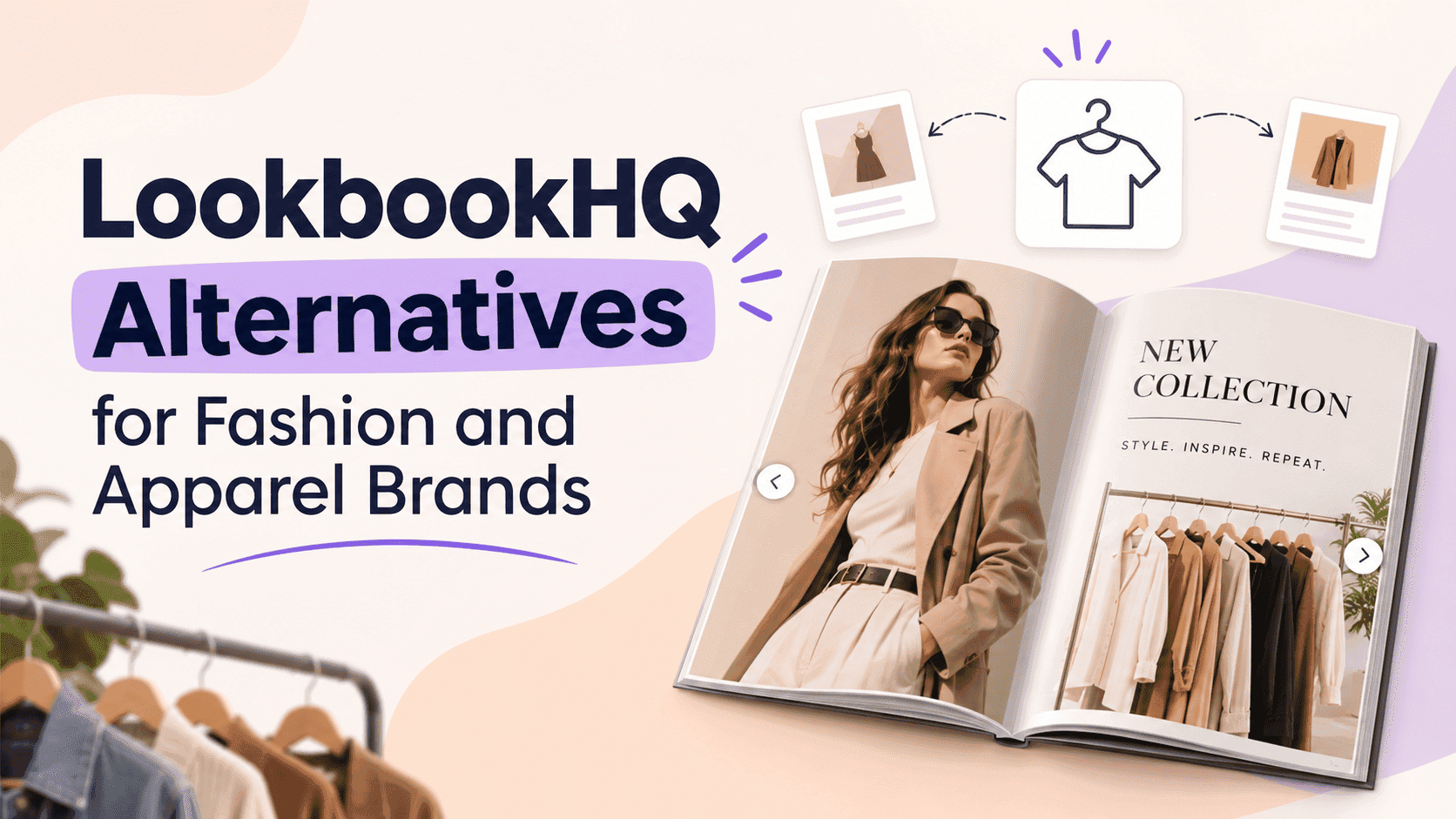
If you searched for LookbookHQ alternatives for fashion and apparel brands, the name probably misled you before you opened this page. LookbookHQ is a B2B content experience platform. Marketing teams at software companies use it to bundle whitepapers, webinars and ebooks into tracked journeys for prospects. It has nothing to do with a spring collection; only the name sounds like fashion.
I built ZipFlipbook, a free tool that turns PDFs into flipbooks you can share or embed, so lookbooks land in my inbox from people who are confused about this exact thing fairly often. This post sorts out what LookbookHQ is, why it's the wrong shape for a clothing label, and which tools fit better. I'll also point out where ZipFlipbook falls short, because it has real limits.
What LookbookHQ is, and why the name misleads fashion brands
LookbookHQ sells to demand-generation and content marketing teams. You load in PDFs, videos and webinar recordings, group them into tracks, and the platform shows which prospects read what, so sales can follow up with the right people. That's useful if you sell enterprise software with a six-month buying cycle.
There's no public price list. It's quoted per customer, and one review site estimates a ten-user first year somewhere between the mid-$30,000s and well past $100,000 once onboarding is added. That's a third party's ballpark, not a quote from the vendor, so check it yourself. Even if the real number is half that, it's a lot of money for a menswear label with four staff and a photographer on retainer.
A fashion brand usually wants something plainer: a lookbook people can flick through on a phone, a line sheet a wholesale buyer can open without downloading anything, and shoppable looks on a product page. Those are different tools, and none needs a demand-gen platform behind it.
Why fashion brands go hunting for an alternative
It usually starts with a PDF. The designer exports a 40-page lookbook from InDesign or Canva and the file comes out at 90MB. Gmail stops attachments at 25MB, so you're now sending a Dropbox link, and half your buyers never click it.
The ones who do click are on a phone, pinching and dragging across two-page spreads that were laid out for a 27-inch monitor. The photography you paid for gets lost in the zoom. After that, you hear nothing. You sent the lookbook to 60 stockists and you have no idea whether anyone got past page three.
So you need three things: a file small enough to send, a reading experience that works on a phone, and some sign of who opened it. A B2B content-journey tool covers the third and makes a mess of the first two.
What a fashion lookbook tool has to get right
Photography comes first. Full-bleed images need to stay sharp when someone zooms, and the tool shouldn't crunch them into mush to save bandwidth. Test this with your own hero shot before you commit to anything.
Mobile behaviour is next. On desktop, a two-page spread feels like a book. On a phone it should drop to one page at a time. Some flipbook tools still serve a shrunken spread on a 6-inch screen, and buyers read a lot of lookbooks on the train.
Links matter more than people expect. A lookbook that can't send someone from the oatmeal knit on page 12 to that knit's product page is a brochure. Video helps as well: 15 seconds of runway or a campaign film does more than another static page.
If you sell wholesale, lead capture is worth having. Put a short form in front of the line sheet and you find out who your buyers are rather than guessing from a forwarded email. And since you'll publish an SS, an AW, a capsule drop and a collab every year, check how the pricing treats a growing pile of publications. Per-publication caps get annoying fast.
Turn Your PDFs into Lead Generation Machines
Start getting highly-qualified leads from your PDFs and landing pages today. It takes exactly 2 minutes to set up.
No credit card required • Sign up in 10 seconds
The best LookbookHQ alternatives for fashion and apparel brands
ZipFlipbook
Upload a PDF, and ZipFlipbook gives you a page-turning flipbook with a share link and an embed code. You can add video, put a lead capture form in front of the content, and see how people move through the pages. The free tier is free, with display ads and a ZipFlipbook watermark. Pro is $19 a month and removes the ads with unlimited flipbooks. Business is $49 a month and adds a custom domain, white-labelling, Zapier and deeper drop-off analytics.
I make it, so weigh that. ZipFlipbook is strongest for wholesale and press: buyers open a lookbook from an email link, and you get the form and stats. It is not a shopping cart, and it does not tag products inside a photo the way a Shopify app does. I compared more options in our guide to the best digital lookbook makers in 2026.
Shopify lookbook apps
If your store runs on Shopify, apps like MOD: Lookbook are the closest match to what shoppers expect on a DTC site. It costs $29 a month with a 7-day trial, supports unlimited lookbooks, and lets you put product hotspots over a photo so a customer taps the jacket and lands on the product. No coding.
It lives inside your store, so you can't hand it to a buyer in an email as a self-contained thing, and it has no page-turning feel. It is a merchandising feature, not a publication.
Issuu
Issuu is the old name in digital publishing, and it works best for magazine-style editorial where you want strangers to find your work on its platform. A fashion zine or a seasonal editorial fits well. For a private wholesale lookbook it's awkward, since the audience you care about is a short list of buyers, not the public. Plans and limits change, so look at the current pricing page before you plan around the free tier.
Flipsnack
Flipsnack has a built-in design editor, plenty of templates, and a feature that generates catalogs from a data feed. The data-feed catalog feature suits brands with hundreds of SKUs that change every season. Flipsnack is heavier than a ten-look capsule needs, and the more useful features sit on paid plans.
Publitas
Publitas turns print catalogs and flyers into shoppable online versions, and it's aimed at retailers with large ranges. Pricing is quote-based. A department store or multi-brand retailer should consider it. An independent label launching its second collection does not need it.
Canva
Canva is where plenty of lookbooks get designed, and its templates are good. After you finish designing, the weak points appear: little tracking, no lead capture, and awkward sharing. Use Canva for design, then publish elsewhere. I walk through that workflow for another format in our post on turning a Canva design into a flipbook, and the same steps apply to lookbooks.
How the options compare
LookbookHQ is a B2B content-journey tool for software marketing teams. It is not built for fashion, and pricing is a custom quote with nothing public. ZipFlipbook suits wholesale and press lookbooks with lead capture and stats, though it has no in-image product tagging. It is free, with Pro at $19 a month and Business at $49. MOD: Lookbook is the pick for shoppable looks on a Shopify store, but it only works inside that store, at $29 a month with a 7-day trial.
Issuu gives you editorial reach and public discovery, and it is awkward for private buyer lists. It has a free tier plus paid plans. Flipsnack covers template-driven and data-feed catalogs; it is heavy for a small capsule, and the useful features sit on paid plans. Publitas serves large retailers with big ranges, is overkill for small labels, and is quote-based. Canva is for designing the lookbook, with little tracking or lead capture, and it has a free tier plus a paid plan.
Turn Your PDFs into Lead Generation Machines
Start getting highly-qualified leads from your PDFs and landing pages today. It takes exactly 2 minutes to set up.
No credit card required • Sign up in 10 seconds
Which one fits your kind of fashion brand
A tiny label selling through its own Shopify store should start with a lookbook app for the store and a free flipbook for everything off-site. That costs you nothing for the flipbook and $29 for the app. For how to put a flipbook on that store, I wrote up the steps in our guide to embedding a digital lookbook on Shopify or WooCommerce.
For a wholesale label, the email to the buyer matters more than almost anything else. A flipbook with a short form in front, sent as a link, gets you names. Add the stats and you know who read the knitwear section twice, which tells you who to call.
A brand with thousands of SKUs and a merchandising team will outgrow these tools and should talk to Flipsnack or Publitas. A fashion student or zine-maker publishing for love may want Issuu's public audience.
Skip LookbookHQ unless you also run a B2B arm selling to businesses, in which case a content platform may make sense for that side.
Getting a lookbook live without a designer on call
Export the PDF at around 150 dpi and aim to land under 20MB. Anything bigger loads slowly on mobile, and the difference to the eye on a phone screen is small. Put your strongest image on the cover, since that's the thumbnail people see in a message preview.
Add product URLs inside the PDF before you export, then open the flipbook preview and click each one to confirm it survived the conversion. Tag them with UTM parameters, something like ?utm_source=lookbook&utm_campaign=aw26, so your analytics shows which season's lookbook sent the traffic.
If the shoppable side is what you care about most, the shoppable lookbook creator post goes through how that works and what to look for.
One practical detail: name your files with the season and year, like aw26-lookbook-v3. By next spring you'll have six versions and no memory of which one went to which buyer.
FAQ
What is LookbookHQ used for?
It's a B2B content experience platform. Marketing teams use it to group content like ebooks and webinars into tracked journeys for prospects. Fashion lookbooks aren't its job.
Is LookbookHQ good for fashion and apparel brands?
No. It's built for enterprise software marketing, with custom pricing to match. A clothing label gets more from a flipbook tool or a Shopify lookbook app.
What is the best LookbookHQ alternative for fashion brands?
For wholesale and press lookbooks, ZipFlipbook is my pick, with the obvious bias that I built it. For shoppable looks on a Shopify store, MOD: Lookbook at $29 a month is the better tool.
Is there a free LookbookHQ alternative?
ZipFlipbook's free tier covers it, with ads and a watermark. Canva's free plan handles the design side but not tracking.
Can I make a shoppable digital lookbook without Shopify?
Yes. Put product links in your PDF, upload it to a flipbook tool, and check each link in the preview. You won't get image hotspots that way, but buyers can still click through.
How much does a digital lookbook cost to make?
The design is the main cost if you hire it out. Publishing can be free, and paid tools range from about $19 to $49 a month at the small-brand end.
Turn Your PDFs into Lead Generation Machines
Start getting highly-qualified leads from your PDFs and landing pages today. It takes exactly 2 minutes to set up.
No credit card required • Sign up in 10 seconds
Before you pay for anything
Take last season's lookbook PDF, upload it to ZipFlipbook's free tier, and open the link on your phone. Thirty seconds will tell you whether the reading experience is good enough, and you'll see what you'd want a paid tool to fix.